
Documents Required for B2B Debt Recovery in India: A Practical Checklist
- 13th November, 2026
- Mamtha
- 0 Comments
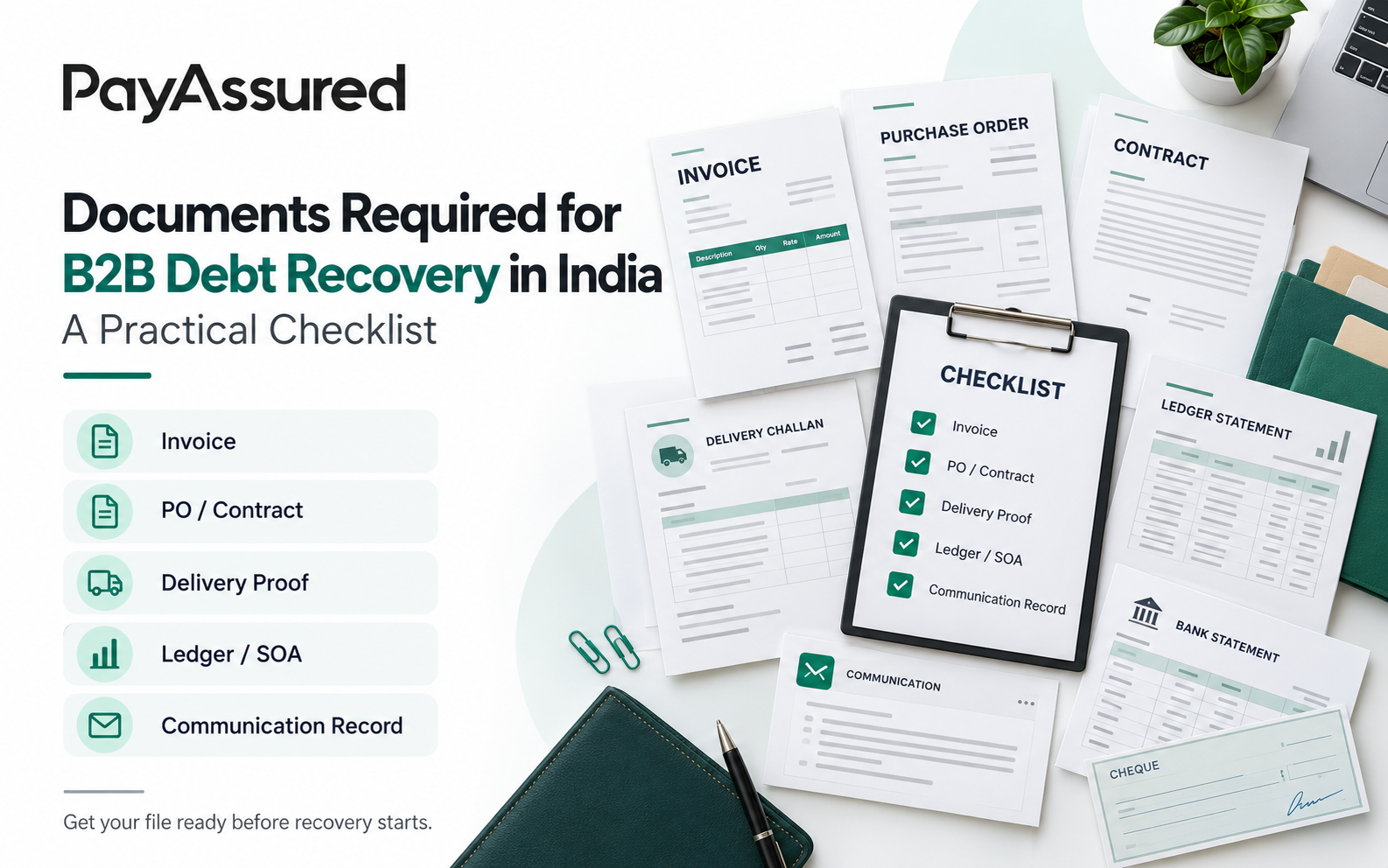
To carry out B2B debt recovery in India, you need the invoice, purchase order or contract, proof of delivery, a reconciled ledger and written communication with the customer. Preparing these records before pursuing payment saves time and strengthens every subsequent step.
When a business customer fails to pay, the first question is often not what to do, but what evidence can be shown. Recovery teams, agencies and advocates all begin by requesting documentation. This guide lists the documents needed for recovering B2B debts in India, explains why each one matters and shows how to address gaps.
Why documents matter
Customers delay payment for many reasons. Sometimes there is a genuine cash-flow problem; in other cases, the customer may claim that goods were not received or that the agreed price was different. A clear record demonstrates that the debt is genuine, the amount is accurate and the work was completed. It also helps answer common objections.
The core documents required for B2B debt recovery in India
- Tax invoice: Include the invoice number, date, amount, GST details and due date.
- Purchase order, contract or work order: Show the terms on which the customer agreed to buy the goods or services.
- Evidence of delivery: For goods, retain the delivery challan, e-way bill, transporter receipt or signed acknowledgement. For services, keep a completion report, approval email or signed timesheet.
- Ledger or statement of account: List every invoice, payment and credit note, ideally reconciled with the customer’s records.
- Agreed payment terms: Keep evidence of the credit period, late fee or interest terms and any discount conditions.
- Communication history: Preserve reminder emails, replies, call notes and messages showing that payment was requested and how the customer responded.
- Acknowledgements and instalments: Retain any email or letter confirming the amount, promising payment or recording a part payment.
- Bank records: Keep payment receipts and, for a bounced cheque, a copy of the cheque and the bank return memo.
Supporting documents worth keeping
- The customer's full legal name, registered address, GST number and PAN.
- The signed credit application or onboarding form.
- The original quotation and any revised quotation.
- Credit notes, debit notes and rate revisions.
- Contact details for the people who placed and approved the order.
How to organize your recovery file
Recovery delays often result from scattered paperwork rather than missing paperwork. Keep a separate folder for each customer and arrange documents chronologically: order, delivery, invoice, reminders and replies. Use clear file names such as InvoiceNumber_Date_DeliveryChallan.pdf, and retain original files instead of relying only on screenshots.
What if certain documents are missing?
Missing documents do not always mean recovery must stop. You may be able to reconstruct the file by taking these steps:
- Ask the transporter for a duplicate lorry receipt or delivery confirmation.
- Download bank statements showing an order advance or part payments.
- Search email records for order confirmations and approvals.
- Ask the sales team for call notes and messages.
- Request a signed balance confirmation from the customer.
Common documentation mistakes
- Invoices without a purchase order number, making them difficult for the customer to match.
- Delivery proof signed by someone who cannot be identified.
- Ledgers that were never shared with the customer.
- Verbal payment promises that were never confirmed in writing.
- Combining disputed and undisputed invoices in one demand.
Quick checklist before escalation
Before escalating an overdue payment, confirm that your file contains the invoice, order or contract, delivery proof, ledger, communication history and relevant bank records. If any important items are missing, reconstruct the file before moving to the next recovery stage.
Once your documents are organized and the invoice remains unpaid, PayAssured can review the case and recommend the appropriate next action.