
Why Accounts Receivable Recovery Services in India Are Becoming a Core Part of Business Operations
- 6th November, 2026
- Navya
- 0 Comments
For many years, following up on overdue invoices was treated as an unpleasant and occasional task, addressed only when a payment became unusually late. That is changing. More Indian businesses now regard accounts receivable recovery services as an established part of their operations rather than a last-minute remedy.
Why this shift is happening
Businesses increasingly recognize that unpaid receivables are not an uncommon annoyance but a regular and foreseeable aspect of B2B trade, where payment terms of 30, 60 or 90 days are common and often extended. Instead of treating every overdue invoice as a separate emergency, companies are incorporating accounts receivable recovery services in India into their ordinary financial processes.
What these services actually cover
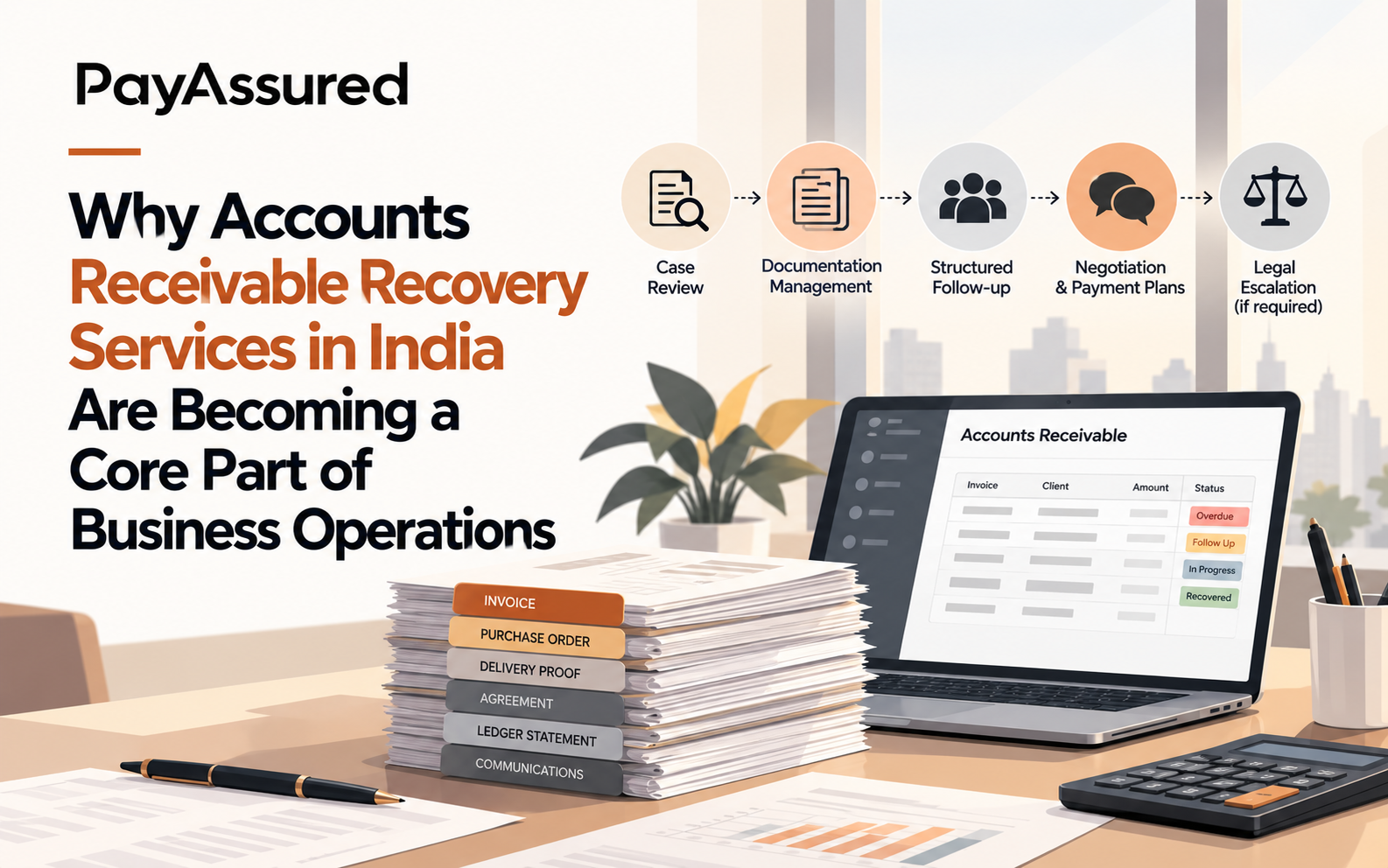
Professional accounts receivable recovery services involve much more than calling clients to request payment. A systematic approach generally includes:
- Case review: Assessing the outstanding amount, invoice age, payment terms and communication history for each receivable.
- Documentation management: Organizing invoices, purchase orders, delivery proofs, ledger statements and communication trails into a clear, evidence-backed case.
- Structured follow-up: Maintaining consistent, professional contact that tracks commitments and keeps agreed timelines moving.
- Calibrated escalation: Using negotiation, payment plans or formal legal communication according to the debtor’s actual behaviour.
This framework defines effective accounts receivable recovery services in India, rather than occasional and reactive follow-up.
Why treating recovery as ongoing infrastructure makes sense
Even a business with healthy revenue can experience serious cash-flow problems when receivables are not collected consistently. Every unpaid invoice represents money that is unavailable for suppliers, salaries or reinvestment. Integrating recovery services into regular operations creates a consistent process for identifying overdue payments before they accumulate into urgent problems.
The problem with reactive-only recovery
Many businesses do not consider recovery until an invoice has been overdue for months and internal patience is exhausted. By then, the matter may be harder to resolve because the debtor has stopped treating payment as a priority and supporting records may be incomplete. Proactive accounts receivable recovery services address this through structured follow-up before a slightly late payment becomes seriously overdue.
How this benefits finance teams
Tracking dozens or hundreds of receivables, remembering who owes what and maintaining consistent follow-up consumes considerable time and attention. Outsourcing this work to specialized accounts receivable recovery services in India reduces that operational burden and allows finance teams to focus on reporting, planning and strategic financial decisions.
Consistency matters more than intensity
A valuable feature of structured accounts receivable recovery is consistency: applying the same careful process to every receivable regardless of size. This contrasts with informal recovery, where large overdue amounts receive urgent attention while smaller invoices are neglected and eventually written off, even though those smaller amounts can become significant in total.
Where PayAssured fits into this model
PayAssured provides accounts receivable recovery services in India designed to function as continuous infrastructure rather than a one-off solution. By applying a systematic approach to review, documentation, follow-up and escalation, PayAssured helps companies build a dependable method for handling overdue payments that can scale as the client base grows.
The bigger picture
Strong revenue figures have limited value if a business cannot convert that revenue into cash. As more Indian businesses recognize this, accounts receivable recovery services are moving from an occasional requirement to a core operational function that protects cash flow, supports financial planning and reduces the daily strain of managing overdue accounts.