
Why Many Companies Fail to Recover Outstanding Payments
- 15th April, 2026
- Nasru
In business, closing a deal often feels like the finish line. Contracts are signed, services are delivered, and invoices are sent. But in reality, the deal is not truly complete until the payment actually arrives. For many companies, this is where the real challenge begins.
Outstanding payments have become a common issue across industries. From small suppliers to large service providers, businesses often find themselves chasing payments long after the work has been completed. While delayed payments are sometimes unavoidable, many companies struggle to recover their dues not because recovery is impossible, but because the process is often handled poorly from the start.
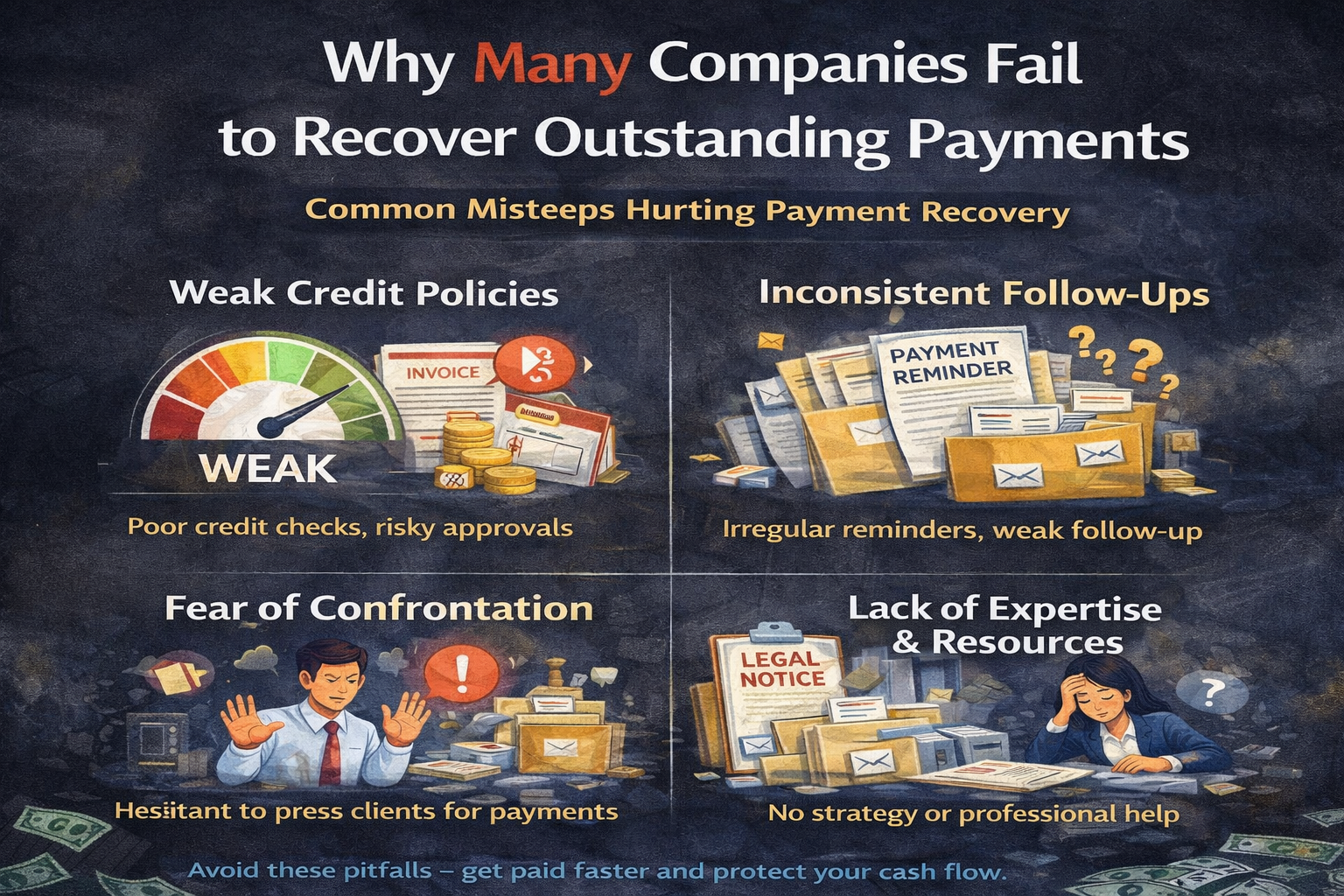
Weak Credit Policies
One of the most common reasons businesses fail to recover payments is weak credit policies. In the excitement of securing new clients or closing deals quickly, companies sometimes skip proper due diligence. They may agree to flexible payment terms without fully assessing the client’s financial reliability. When problems arise later, the lack of clear credit policies leaves businesses with little leverage to enforce payment.
Inconsistent Follow-ups
Another issue lies in inconsistent follow-ups. Payment recovery requires persistence and structure, but many companies approach it casually. A reminder email may be sent once or twice, followed by a few calls, and then the matter quietly fades into the background as other priorities take over. Unfortunately, this approach often signals to the debtor that the payment is not being taken seriously.
The Fear of Confrontation
There is also a psychological factor that many businesses overlook: the discomfort of confrontation. Business relationships are valuable, and companies often hesitate to push clients too hard for payment. They worry about damaging partnerships or losing future work. While maintaining relationships is important, avoiding difficult conversations can ultimately lead to significant financial losses.
Lack of Expertise and Resources
Debt recovery is not simply about sending reminders; it requires a structured strategy, proper documentation, and sometimes legal knowledge. Many companies do not have dedicated teams or experience in handling payment disputes. Without the right approach, recovery efforts become reactive rather than strategic, making it much harder to secure the payment.
Poor Timing
Timing is another critical factor. The longer an invoice remains unpaid, the more difficult recovery becomes. Delays reduce the urgency for the debtor and increase the chances of financial complications on their side. Businesses that wait too long before taking action often find themselves with fewer options for resolving the situation.
"The deal isn't done until the money is in your account. Treat payment recovery as a business priority, not an after-thought."
Final Thoughts
The reality is that recovering outstanding payments requires a disciplined and proactive approach. Companies that set clear credit policies, maintain consistent follow-ups, and address payment delays early are far more likely to protect their cash flow.
In the end, unpaid invoices are not just an accounting problem - they are a reflection of how effectively a business manages its financial processes and client relationships. Companies that treat payment recovery as a structured part of their operations are far better equipped to avoid the costly cycle of overdue invoices.