
7 Signs a Client May Never Pay Your Invoice (And What to Do Next)
- 15th April, 2026
- Vijay
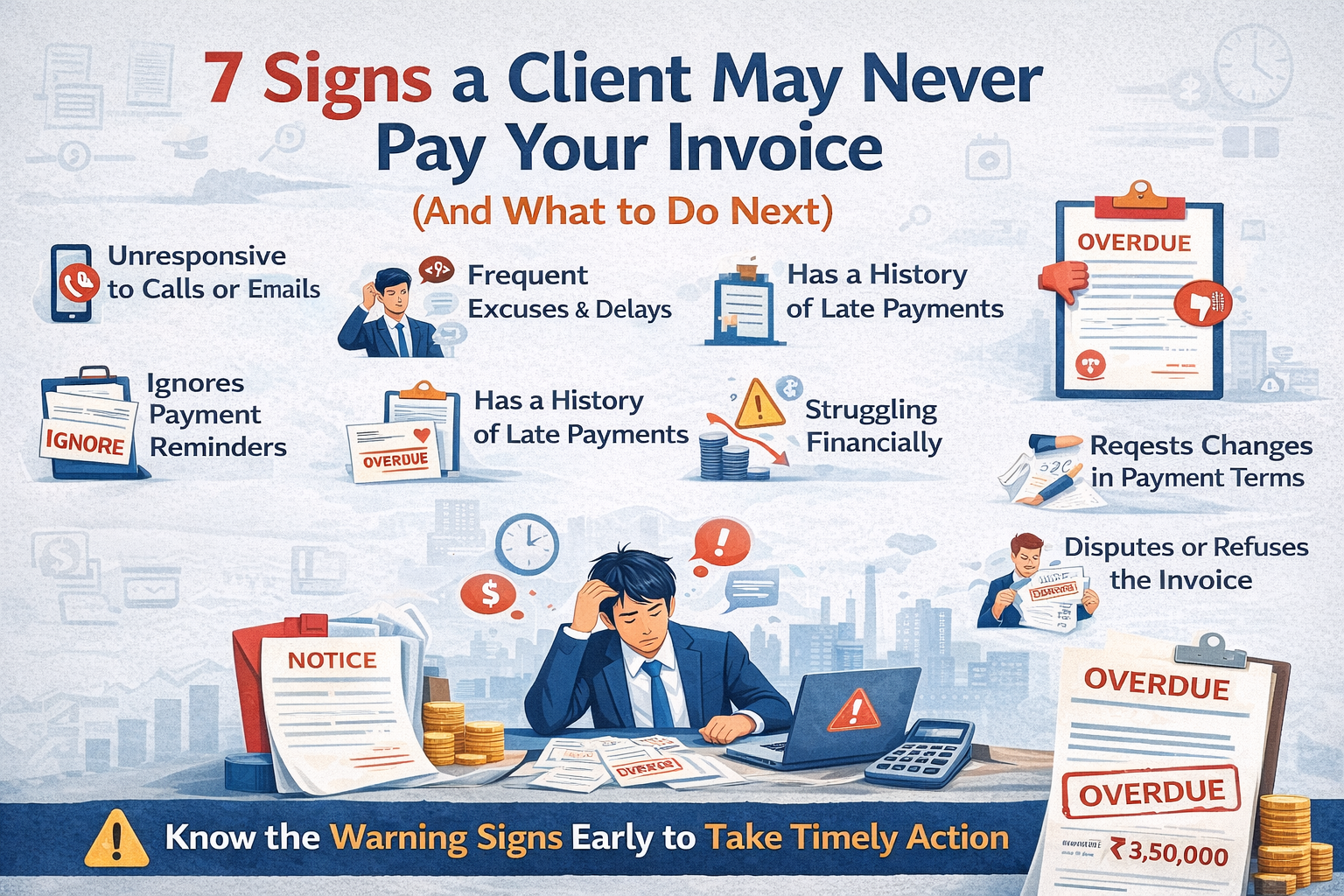
In business, delayed payments are common. However, some payment delays are not just temporary - they are warning signs that a client may never intend to clear the invoice. Many companies continue chasing payments for months, hoping the client will eventually pay. But recognizing early warning signs can help businesses take timely action and avoid serious cash flow problems.
Here are seven common signs that a client may never pay your invoice and what you should do about it.
1. They Suddenly Stop Responding to Calls or Emails
One of the earliest warning signs is when a client becomes unresponsive after receiving the invoice. Calls go unanswered, emails are ignored, and communication becomes difficult.
What to do: Follow up professionally through multiple channels. If there is still no response, it may be time to escalate the matter.
2. Frequent Excuses for Payment Delays
Some clients repeatedly give excuses such as internal approval delays, accounting issues, or temporary financial problems. While occasional delays happen, constant excuses without clear payment commitments are a red flag.
What to do: Request a clear payment date and document all communications.
3. They Have a History of Late Payments
Clients who have previously delayed payments are more likely to repeat the behavior. If every invoice requires multiple reminders, it may indicate a pattern of poor payment discipline.
What to do: Consider stricter payment terms or partial advance payments for future work.
4. They Start Disputing the Invoice
Some clients suddenly raise disputes about the invoice after receiving payment reminders. They may question the scope of work, pricing, or deliverables even though everything was previously agreed upon.
What to do: Maintain proper documentation of contracts, emails, and approvals to address such disputes.
5. They Request Changes to Payment Terms After Work Is Completed
A client who asks to extend payment terms after the service has already been delivered may be trying to delay payment indefinitely.
What to do: Stick to the agreed payment terms and avoid unnecessary extensions without valid reasons.
6. The Client Is Facing Financial Trouble
If the company is experiencing layoffs, operational issues, or financial instability, it may struggle to clear outstanding invoices.
What to do: Act quickly to recover your payment before the financial situation worsens.
7. They Ignore Payment Reminders Completely
When a client consistently ignores payment reminders, it often indicates that they are not prioritizing the payment or may be avoiding it intentionally.
What to do: At this stage, businesses should consider formal recovery steps, such as issuing a legal notice or involving professional debt recovery services.
"Early detection of payment risks is the best defense against bad debts. Don't wait for the silence to become permanent."
Final Thoughts
Unpaid invoices can seriously impact a company’s cash flow and financial stability. The key to effective recovery is identifying warning signs early and taking timely action. Instead of waiting for months hoping the payment will arrive, businesses should adopt a structured approach to payment recovery.
Recognizing the problem early can make the difference between recovering your money and writing it off as a loss.