

How a Legal Notice Can Help Businesses Recover Outstanding Payments Faster
- 15th April, 2026
- Mamtha
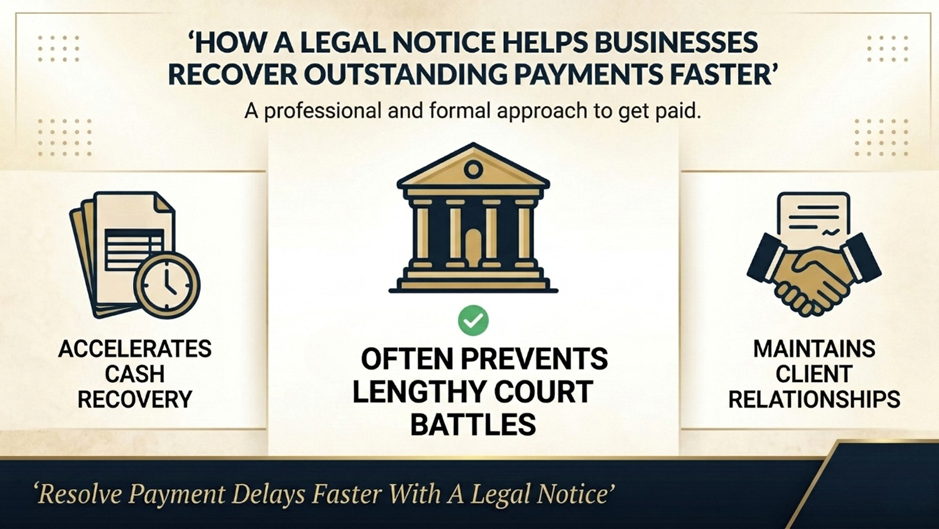
In the business world, delayed payments and unpaid invoices are common challenges. Many companies spend months sending reminders, emails, and making follow-up calls, yet the payment still remains pending. Over time, this not only affects cash flow but also consumes valuable time and resources.
One of the most effective ways businesses address this problem is by sending a legal notice.
A legal notice is often the first formal step toward resolving payment disputes and recovering outstanding dues without immediately entering into lengthy legal proceedings.
What Is a Legal Notice?
A legal notice is a formal communication sent to a debtor informing them about the pending payment and requesting them to settle the dues within a specified period. It clearly states the details of the unpaid amount and the consequences of failing to resolve the matter.
A legal notice can also help businesses recover the Interest on delayed payments, not just the outstanding invoice amount. Depending on the agreed terms and conditions or applicable MSME delayed payment interest rules, the notice can include the demand for interest. This often increases pressure on the debtor to settle the dues quickly.
Unlike casual reminders or emails, a legal notice carries legal weight and signals that the issue is being taken seriously.
Why Legal Notices Often Lead to Faster Payments
When a legal notice is issued, it changes the nature of the conversation. The debtor realizes that the matter may escalate into a legal dispute if the issue is not resolved promptly.
This often results in faster responses and negotiations because:
- It demonstrates seriousness and professionalism
- It creates legal accountability for the debtor
- It sets a clear timeline for payment resolution
- It encourages settlement before the matter escalates further
In many cases, businesses find that payments which remained unresolved for months are cleared shortly after a legal notice is served.
A Cost-Effective Alternative to Litigation
Many companies hesitate to take action because they assume legal processes are expensive and time-consuming. However, sending a legal notice is often a cost-effective and practical first step.
It allows both parties to resolve the matter through communication and settlement before entering formal legal proceedings. This approach helps businesses recover their dues while maintaining professionalism and protecting business relationships.
When Should Businesses Consider Sending a Legal Notice?
If an invoice remains unpaid despite multiple reminders and follow-ups, issuing a legal notice can be the next logical step. Businesses typically consider this option when:
- Payments are delayed for several weeks or months
- The debtor stops responding to communication
- The outstanding amount significantly impacts cash flow
- Informal recovery attempts have failed
Taking timely action increases the chances of successful recovery.
"A legal notice signals that the honeymoon period for payment delays is over. It's a professional yet firm way to reclaim what is rightfully yours."
Final Thoughts
Outstanding payments can silently disrupt a company’s financial stability. While many businesses rely only on reminders and internal follow-ups, a structured recovery approach often makes a significant difference.
A legal notice acts as a strong signal that the matter is being formally addressed. In many situations, it encourages debtors to resolve the issue quickly and avoid further legal complications. For businesses facing persistent payment delays, a legal notice can be an important step toward recovering dues and restoring healthy cash flow.