
Recovering Payments Yourself v/s Using PayAssured: Which Approach Works Better?
- 15th April, 2026
- Abhishek Nedu
Unpaid invoices are one of the most common challenges businesses face today. Many companies spend weeks or even months trying to recover outstanding payments through emails, calls, and repeated reminders. Sometimes the money eventually arrives, but in many cases the payment continues to remain stuck, creating pressure on cash flow and slowing down business growth.
When businesses encounter overdue invoices, they usually face two choices. One option is to continue pursuing the payment internally. The other is to involve a professional debt recovery partner such as PayAssured that specializes in recovering outstanding dues.
Understanding how these two approaches differ can help businesses decide which route is more practical and effective.
Recovering Payments Internally
Many companies initially try to recover payments themselves. Handling recovery internally does offer certain benefits. Businesses can communicate directly with the client, which sometimes helps maintain the relationship. It also avoids paying service fees to external agencies, and the process stays completely within the company’s control.
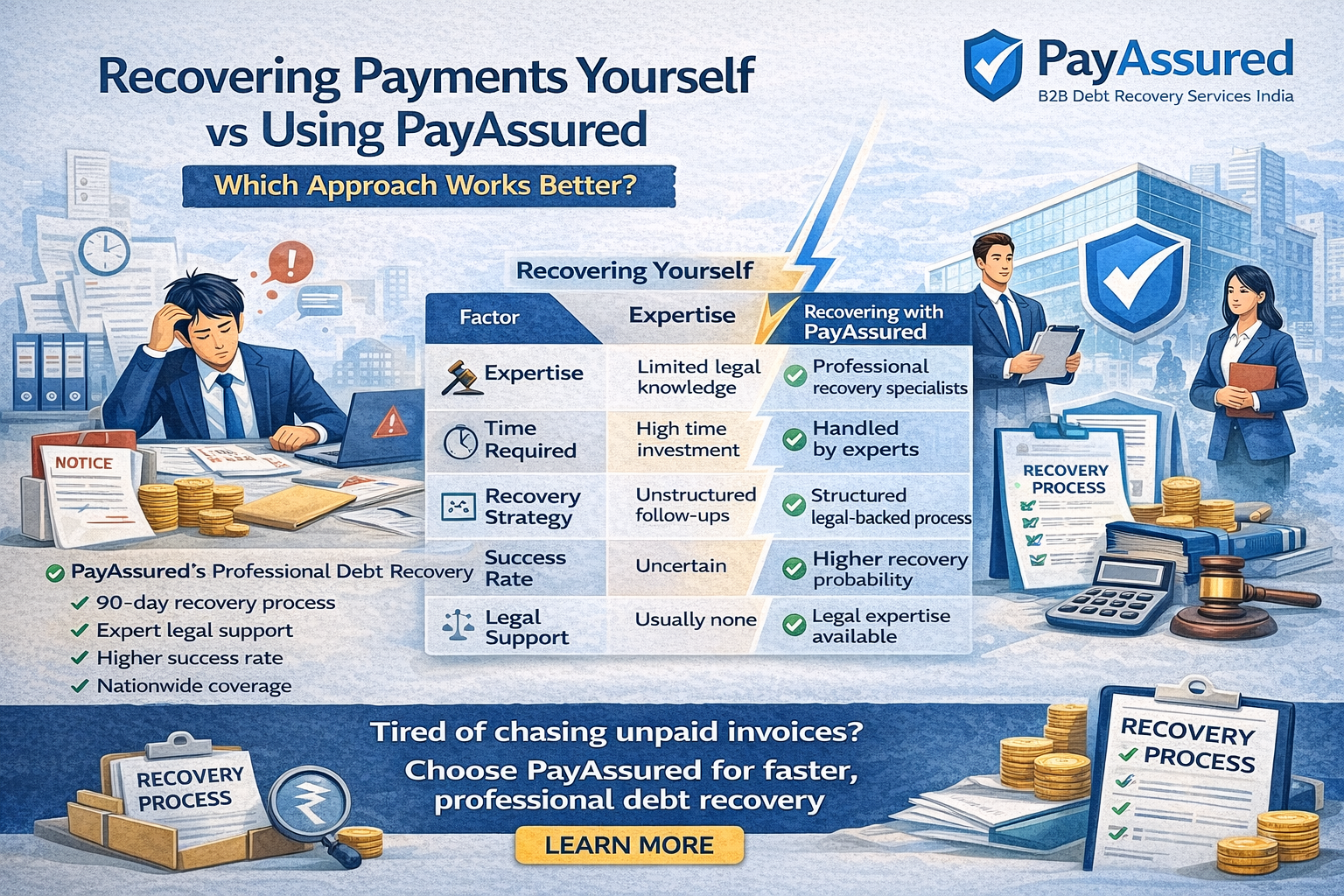
However, in reality, internal recovery often becomes more complicated than expected. One of the biggest challenges businesses face is limited knowledge of legal recovery procedures. Most companies are not familiar with the legal frameworks or formal processes required when payments remain unpaid for long periods.
Another issue is the time and effort involved. Chasing overdue payments can take up a surprising amount of time. Repeated follow-ups, calls, and emails can distract business owners and finance teams from focusing on operations, sales, and growth.
Recovering Payments with PayAssured
Professional recovery firms such as PayAssured offer a very different approach. Instead of relying on informal reminders, they use a structured recovery framework designed specifically for outstanding business payments.
PayAssured focuses on B2B debt recovery and helps companies convert overdue invoices into working capital through a systematic recovery process. One of the key advantages of working with a specialized recovery partner is the presence of a defined process. PayAssured follows a structured recovery framework designed to resolve cases efficiently within a limited timeframe.
Another major benefit is access to legal expertise. Professional recovery teams understand the legal procedures involved in payment disputes and ensure that recovery efforts remain compliant with applicable laws. This adds credibility and seriousness to the recovery process.
Additionally, companies like PayAssured operate across India through a nationwide recovery network. This allows them to pursue cases regardless of where the debtor is located.
"Internal recovery is about persistence; professional recovery is about strategy. When persistence fails, strategy wins."
Comparing the Two Approaches
When businesses try to recover payments themselves, the process often depends on personal communication and persistence. While this may work for minor delays, it becomes difficult when the debtor stops responding or repeatedly postpones payment.
Professional recovery services, on the other hand, bring expertise, legal backing, and a structured strategy into the process. This difference in expertise, strategy, and negotiation power often makes professional recovery far more effective for serious outstanding payments.
When Should Businesses Consider Professional Recovery?
There are certain situations where involving a professional recovery partner become a logical step. This usually happens when invoices remain unpaid for more than 45 to 90 days, when clients stop responding to reminders, or when the outstanding amount begins to significantly affect business cash flow.
Final Thoughts
Recovering payments internally can work when delays are minor and clients remain responsive. But when invoices remain unpaid for extended periods, businesses often benefit from a more structured and professional recovery process. After all, revenue only truly matters when it actually reaches your bank account.