
MSME Payment Recovery in India: A Complete Guide for Small Businesses
- 28th September, 2026
- Ayantika Das
- 0 Comments
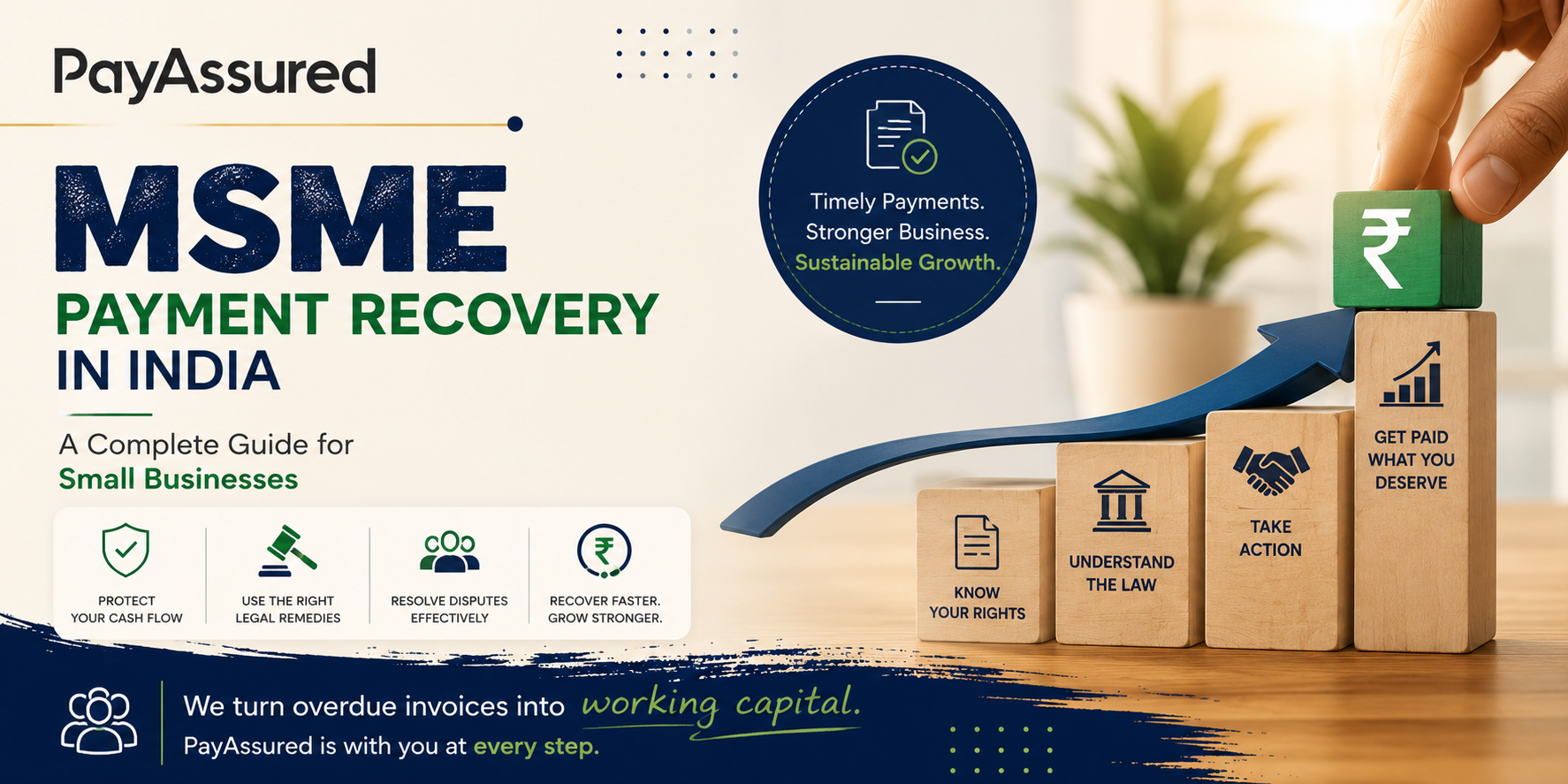
For a small business, a sale is meaningful only when the payment is actually received. An invoice may appear as revenue in the books, but until the money reaches the business, it cannot be used to pay salaries, purchase raw materials, meet tax obligations, manage rent or invest in growth. This gap between raising an invoice and receiving payment has become one of the most persistent financial challenges for micro and small enterprises in India.
The problem often begins quietly. A business supplies goods or completes a service, raises an invoice and waits for payment according to the agreed credit period. When the due date arrives, the buyer asks for a few more days. The accounts department says that approval is pending. A week later, the payment is said to be under process. Another month passes, and the supplier continues following up because it does not want to lose an important customer.
For a large company with substantial reserves, a delayed invoice may be manageable. For a small business operating with limited working capital, the same delay can affect the entire business cycle. Money expected from one customer may have already been allocated towards salaries, vendors, machinery payments, rent or the next production cycle. When that payment is delayed, the business may be forced to borrow money merely to finance operations that have already generated revenue on paper.
India has a specific statutory framework addressing delayed payments to qualifying micro and small enterprises. Under the MSMED Act framework, where there is a written agreement, the agreed payment period cannot exceed 45 days from acceptance or deemed acceptance of goods or services. Where the statutory conditions for delayed payment apply, the buyer may also become liable for compound interest with monthly rests at three times the bank rate notified by the Reserve Bank of India.
This protection is important, but recovery is rarely achieved by simply waiting for the law to operate automatically. The practical strength of a payment recovery case depends heavily on the quality of the commercial records maintained by the supplier. Many businesses focus on sales documentation when the transaction begins but do not maintain the same discipline once the goods or services have been delivered.
A strong recovery file should clearly establish the commercial relationship, the work performed or goods supplied, the amount invoiced, the agreed payment terms and the balance that remains outstanding. Purchase orders, work orders, contracts, invoices, delivery challans, e-way bills where applicable, goods receipt records, service completion confirmations, ledger statements, email correspondence and written payment acknowledgements can all become important parts of the recovery process.
The real difficulty often arises when the buyer disputes the transaction only after repeated demands for payment. A supplier may hear that the invoice was never approved, that the goods were defective, that the service was incomplete or that the concerned employee has left the company. Some disputes may be genuine, while others may require closer scrutiny against the contemporaneous documents and communications.
For this reason, a small business should not treat payment follow-up as a series of informal phone calls. The recovery process should gradually move from reminders to documented communication. An email confirming the invoice number, amount outstanding, due date and previous payment commitments creates a clearer commercial record than repeated verbal conversations.
Where the buyer acknowledges the liability but requests time, the supplier may consider a written repayment schedule or settlement arrangement. The document should clearly record the acknowledged outstanding amount, installment dates and consequences of default. Informal promises such as "payment will be released next week" are difficult to manage when they are repeatedly postponed without a documented commitment.
When ordinary follow-up fails, a formal demand or legal notice may become necessary. The purpose of a legal notice is not merely to threaten litigation. A properly structured notice places the transaction, outstanding amount, supporting documents, prior commitments and demand for payment on record. It can also create a defined period within which the buyer is expected to respond or clear the dues.
For eligible enterprises, the MSME delayed-payment mechanism may provide a further recovery route. The Ministry of Micro, Small and Medium Enterprises provides the official MSME framework and related information for enterprises, while delayed-payment disputes can involve the relevant Micro and Small Enterprise Facilitation Council mechanism depending on eligibility and the facts of the transaction.
The statutory framework should not, however, be understood as a substitute for proper case preparation. Registration status, the timing of the transaction, the nature of the enterprise, the documents available, contractual dispute-resolution provisions and limitation issues can all affect the appropriate strategy. A business should assess these factors before selecting a recovery route rather than assuming that every unpaid invoice follows the same process.
Another important consideration is the age of the debt. Many small businesses continue pursuing old invoices through informal reminders for years because the customer occasionally responds or promises payment. This approach can be commercially dangerous. Delay can create evidentiary problems, weaken internal records and increase the risk that the debtor's financial position deteriorates further.
The recovery strategy should therefore change as the invoice ages. A recently overdue payment may justify a commercial reminder and direct discussion. A payment that remains unresolved despite repeated commitments may require formal escalation. A seriously aged receivable should be reviewed as a recovery case rather than simply remaining in the accounts receivable ageing report.
Small businesses should also understand that recovery does not always mean immediate litigation. A well-managed recovery process can involve debtor communication, documentation review, commercial negotiation, settlement, structured instalments and legal escalation where necessary. The objective is to choose the most effective route based on the debtor's conduct and the strength of the claim.
Preserving a customer relationship can remain important, particularly where the buyer and supplier have worked together for years. But protecting a relationship should not mean allowing indefinite payment delays. Professional recovery communication can be firm without being unnecessarily hostile. Clear deadlines, documented commitments and consistent escalation often create more commercial certainty than endless informal follow-ups.
A structured recovery partner such as PayAssured can support businesses that do not have the internal resources to continuously follow up, analyse recovery documentation and manage escalation. For many small businesses, the problem is not that they are unaware of the unpaid amount. The difficulty is that sales teams, founders and finance departments are already occupied with running the business, while old receivables require dedicated and consistent attention.
The most effective payment recovery strategy begins long before a dispute occurs. Clear contracts, defined payment terms, proper invoicing, delivery evidence, written communication and regular receivables reviews can significantly improve a business's position when a customer delays payment. A company that maintains strong records from the beginning is better prepared to negotiate, issue a formal demand or pursue an appropriate legal remedy later.
For India's small businesses, payment recovery should be treated as a part of financial management rather than an emergency response. Revenue growth without collection discipline can create the appearance of success while weakening actual cash flow. A business may continue increasing sales while simultaneously becoming financially stressed because too much of its money remains locked in receivables.
The central lesson is simple: an unpaid invoice should not be allowed to remain indefinitely in the gap between accounting and action. Small businesses that identify delays early, preserve documentation, communicate formally and escalate strategically are better positioned to protect their working capital.
For an MSME, recovering money already earned can be as important as winning the next customer. Sales create opportunity, but collections sustain operations. A disciplined payment recovery system allows a small business to protect its cash flow, maintain commercial stability and pursue growth without allowing old dues to quietly become permanent losses.