
Best Debt Recovery Companies in Bangalore: Client Not Paying Your Invoice? Here Are Your Legal and Practical Options in India
- 26th September, 2026
- Mamtha
- 0 Comments
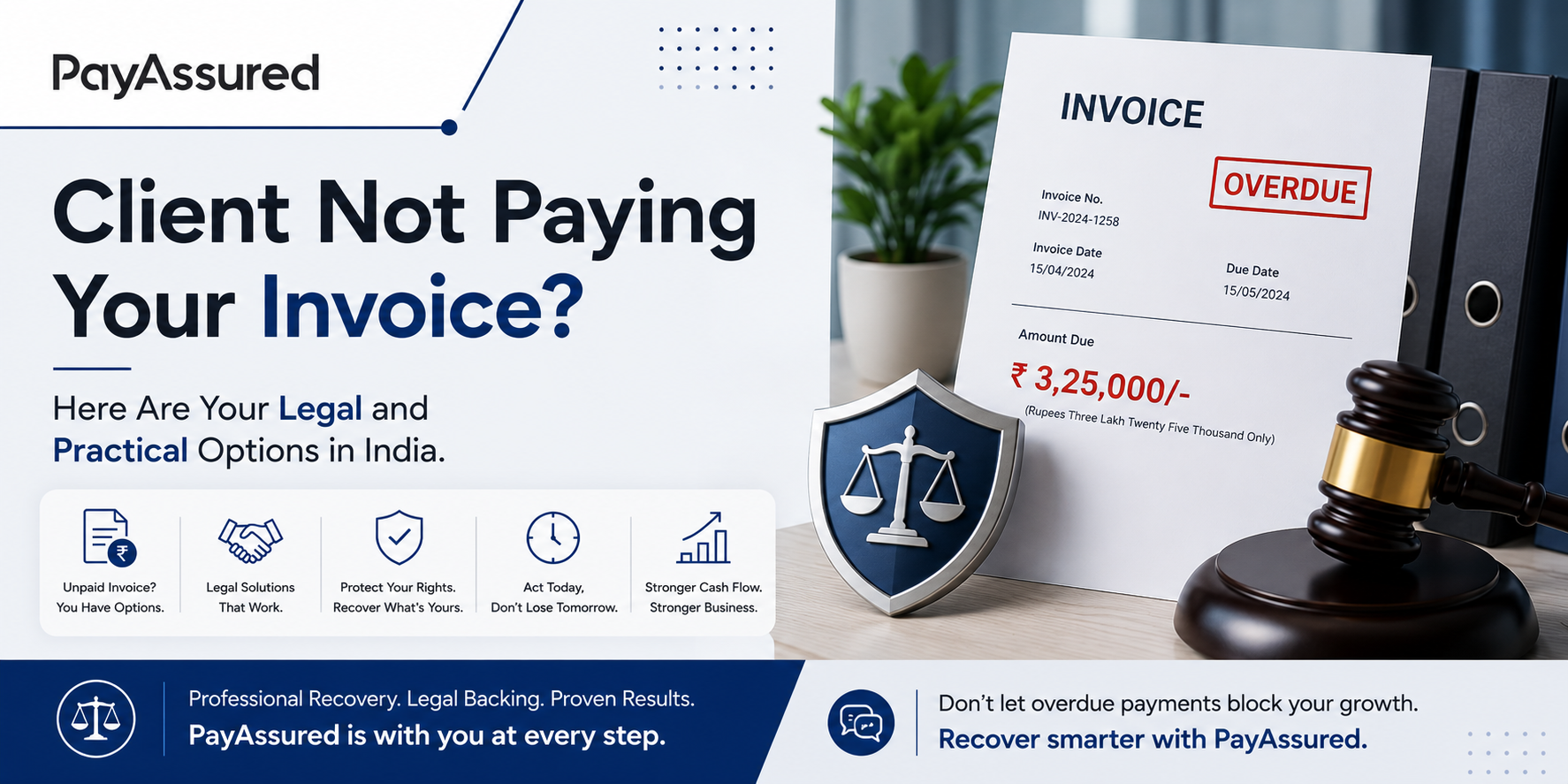
For a business, completing an order or delivering a service is only half the transaction. The transaction is truly complete when the payment reaches the bank account. Yet, across India's B2B ecosystem, businesses frequently find themselves waiting weeks or months for invoices that have already crossed their due dates. What begins with a polite reminder often turns into repeated calls, unanswered emails and the familiar assurance that the "payment is under process."
An unpaid invoice is more than an accounting entry. It represents money that has already been earned but cannot be used. The supplier may have paid employees, purchased raw materials, borne logistics expenses and fulfilled tax obligations, while the revenue from the transaction remains stuck with the buyer. When several such invoices accumulate, even a profitable business can begin to experience pressure on its working capital.
The first response to a delayed invoice should not necessarily be aggressive. In many commercial relationships, payments are delayed because of internal approval processes, documentation gaps, invoice disputes or temporary financial constraints. A structured follow-up can often resolve such cases without damaging the business relationship. The important distinction lies between a genuine delay and systematic avoidance.
A business should begin by examining its documentation. The invoice, purchase order, work order, agreement, delivery challan, goods receipt, proof of service completion, email correspondence, WhatsApp communication, ledger statement and any acknowledgement of debt can become important in establishing the commercial transaction. Even in the MSME delayed-payment framework, official guidance recognizes that evidence is not limited to a purchase or work order; acknowledgements on invoices, delivery challans, part payments and emails may also be relevant.
Once the documents are organised, communication with the client should become increasingly formal. Informal phone calls may be useful at the beginning, but they should not remain the only recovery mechanism. Written communication creates a clear record of the amount due, invoice details, original payment terms, previous commitments and the time being provided for payment.
At this stage, the business must also understand why the client is not paying. There is a major difference between a buyer who accepts the liability but requests additional time and a buyer who continuously changes the reason for non-payment. Repeated promises, unexplained deductions, sudden quality disputes raised long after delivery, requests to resend documents that have already been shared and complete avoidance of written acknowledgement can all indicate that ordinary follow-up may no longer be sufficient.
Where commercial follow-up fails, a formal legal notice can become an important escalation. A carefully prepared notice places the claim on record, identifies the underlying transaction, states the outstanding amount and calls upon the debtor to make payment within the specified period. In many cases, the seriousness of formal legal communication can encourage the debtor to engage in settlement discussions before the dispute develops into prolonged proceedings.
However, sending a legal notice should not be treated as an isolated recovery strategy. Effective recovery depends on the strength of the documentation, the contractual terms, the debtor's financial position, the age of the invoice and the appropriate legal forum. A business that sends repeated notices without a clear escalation plan may only lose more time.
For eligible micro and small enterprises, the delayed-payment framework under the MSMED Act can provide an additional route. The official MSME Samadhaan portal states that eligible micro and small enterprises with valid registration may approach the relevant Micro and Small Enterprise Facilitation Council in delayed-payment matters. The framework also provides for interest consequences in qualifying cases where payment is delayed beyond the prescribed period.
This remedy, however, must be considered with attention to eligibility and timing. Official MSME guidance states that registration benefits cannot be claimed retrospectively for invoices arising before the relevant registration and also notes the application of limitation principles to delayed-payment claims. Businesses should therefore evaluate their position early rather than assuming that every old receivable can be pursued indefinitely.
Depending on the facts of the transaction, a business may also have other legal options. Contractual disputes may be subject to arbitration where the agreement contains an applicable arbitration clause. Other payment claims may require appropriate civil or commercial proceedings. Cases involving dishonoured cheques can involve a different statutory route, subject to the facts and legal requirements of the particular matter. The correct recovery strategy therefore depends on the documents and circumstances of each transaction rather than on a single standard approach.
One of the most common mistakes businesses make is waiting too long. The longer an invoice remains unpaid, the more difficult recovery can become. Employees handling the transaction may leave either company, communication records may become difficult to locate, the debtor's financial condition may deteriorate and the commercial urgency of the matter may gradually disappear inside the creditor's own organisation.
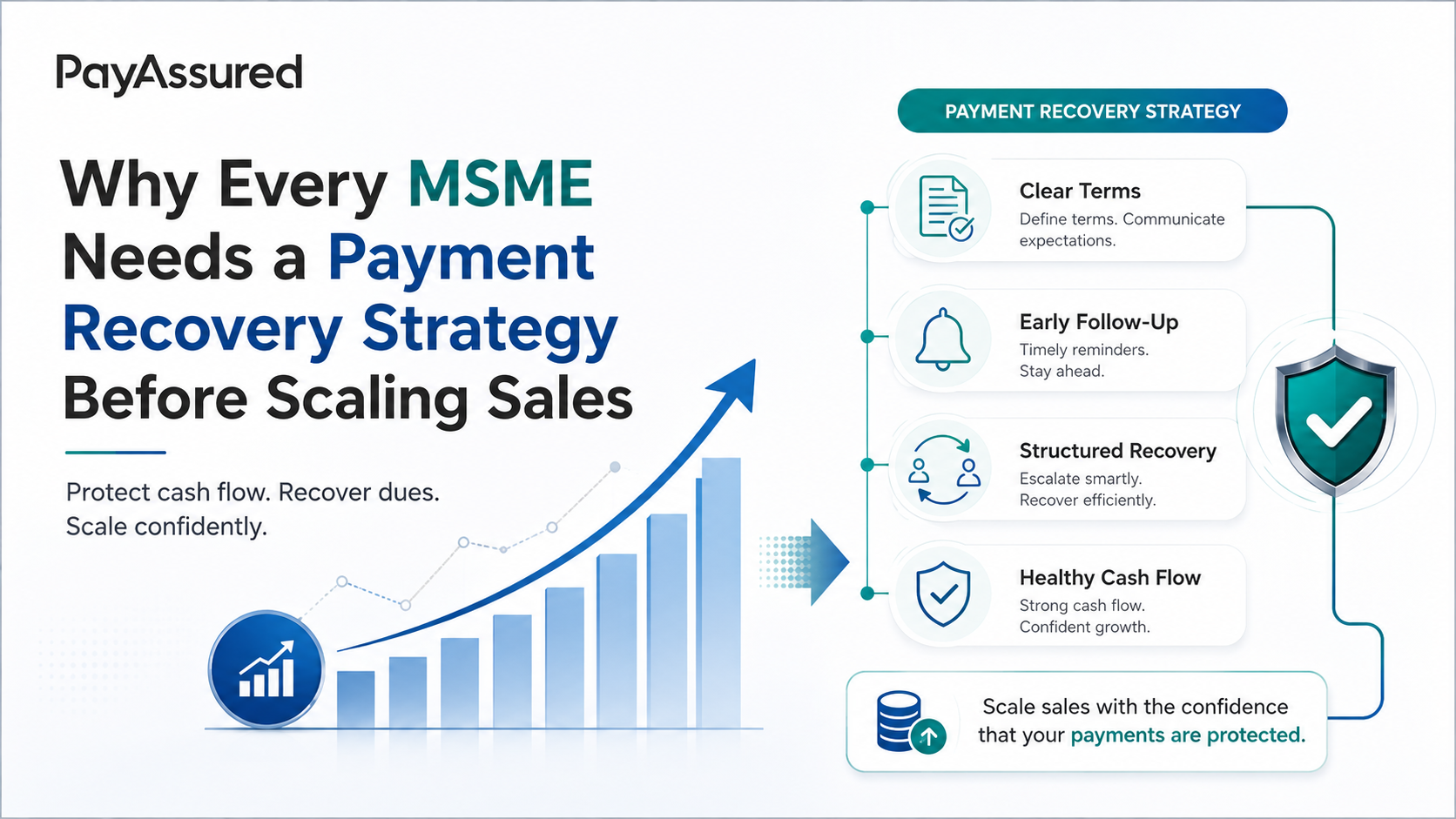
A more effective approach is to treat payment recovery as a structured business process. Early reminders should be followed by formal written communication. Broken payment commitments should trigger escalation. Documentation should be reviewed before the matter becomes seriously overdue. Where negotiation remains possible, a written settlement or payment schedule can provide clarity. Where the debtor is avoiding payment, the business should promptly evaluate the appropriate recovery mechanism.
The objective of recovery should not always be immediate litigation. In many B2B relationships, preserving the commercial relationship remains valuable. A professional recovery approach focuses first on obtaining payment through communication, negotiation and structured escalation while keeping stronger legal options available when required. This balance is particularly important where the debtor may remain a customer, distributor, dealer or long-term business partner.
This is where a structured recovery partner such as PayAssured, a Bangalore-based debt recovery company serving businesses across India, can become relevant. Instead of allowing internal sales, finance and management teams to spend months repeatedly following up on the same outstanding invoice, businesses can adopt a focused recovery process built around documentation review, debtor communication, negotiation, escalation and, where appropriate, legal action.
An unpaid invoice should never be treated as a routine inconvenience. It is a business asset that has not yet been converted into cash. The sooner a company identifies the reason for non-payment, organizes its evidence and chooses an appropriate recovery path, the better its chances of protecting both cash flow and commercial relationships.
For Indian businesses, the question is therefore not simply whether a client will eventually pay. The more important question is whether the business has a clear process for what happens when the client does not. A disciplined recovery strategy can turn uncertain receivables into actionable cases and help prevent overdue invoices from quietly becoming permanent losses.