
The Cost of Being Too Polite: Why Businesses Lose Money by Waiting Too Long
- 13th August, 2026
- Sharon
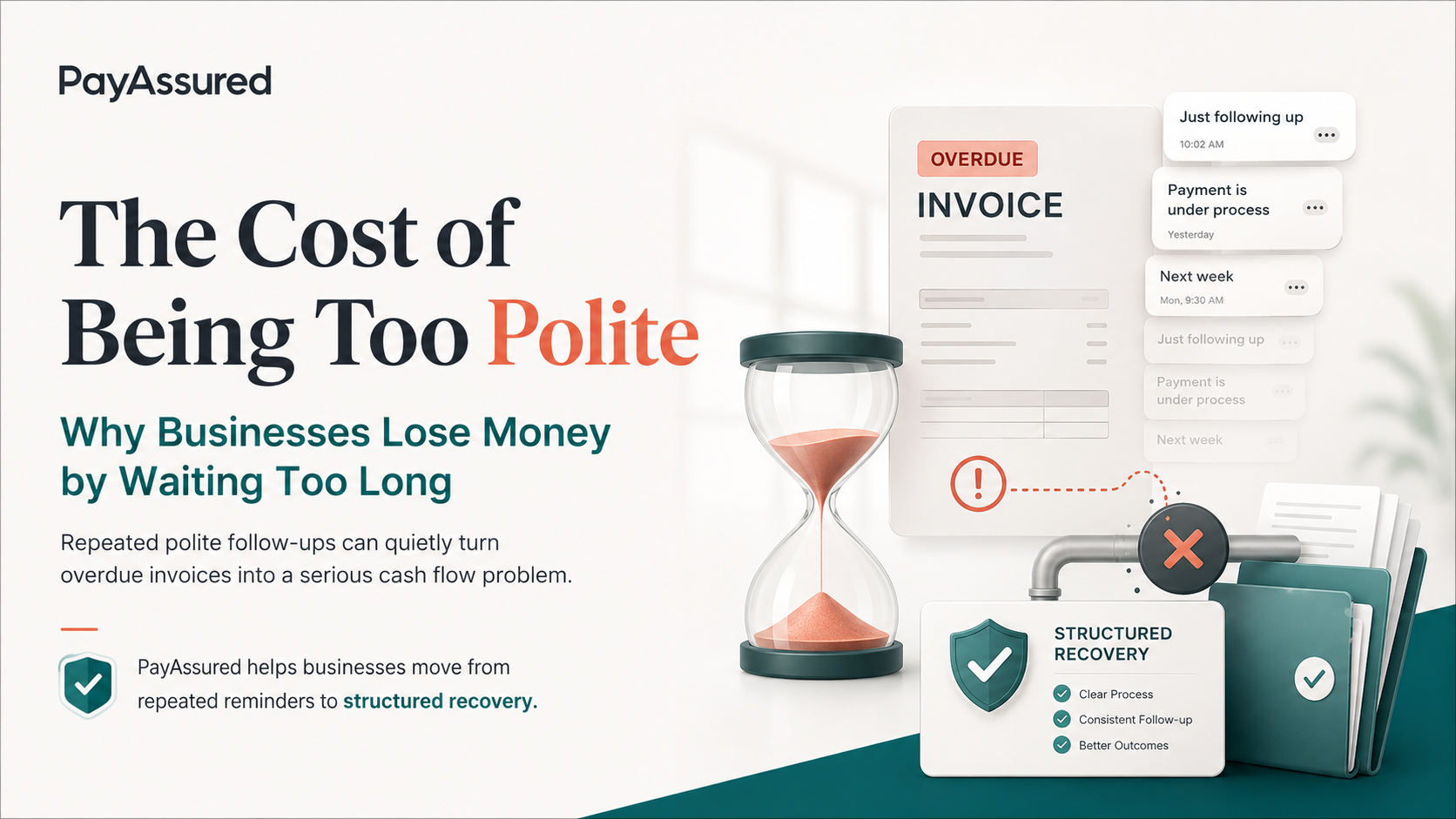
In business, politeness is important. It helps build relationships, maintain trust and keep commercial conversations professional. But when it comes to unpaid invoices, being too polite for too long can become expensive.
Many businesses do not lose money because they never asked for payment. They lose money because they kept asking softly, waited endlessly and allowed the debtor to control the timeline. What starts as a respectful follow-up slowly becomes a pattern of delayed responses, vague promises and repeated excuses.
A client may first say that the payment is under process. Then they may ask for a few more days. After that, the finance team may say approval is pending. Someone may promise payment next week. The business continues to wait because it does not want to sound aggressive or damage the relationship. But while the business waits, its own cash flow suffers.
This is the hidden cost of being too polite.
For many Indian businesses, especially MSMEs and B2B service providers, delayed payments are not just an inconvenience. They affect working capital, vendor payments, salaries, GST obligations, expansion plans and daily operations. A company may have completed the work, delivered the product or service, raised the invoice and fulfilled every commitment. Yet, if the payment is not received, the business is still carrying the burden.
The biggest mistake businesses make is treating every delayed payment as a relationship issue instead of a recovery issue. They worry that a firm reminder may upset the client. They hesitate to send formal communication. They avoid escalation because they hope the debtor will pay voluntarily. But in many cases, the debtor becomes comfortable because there is no real pressure.
When a business waits too long, the invoice starts losing urgency. The debtor may stop taking follow-ups seriously. Calls may go unanswered. Emails may be ignored. New excuses may appear. Internal records may become difficult to trace. The people who handled the transaction may move on. What could have been resolved with timely pressure may later become a difficult recovery case.
This does not mean businesses should become harsh or unprofessional. Recovery is not about shouting, threatening or damaging relationships. It is about creating seriousness, structure and accountability. A business can remain professional while still being firm. It can protect relationships without allowing payment discipline to collapse.
This is where PayAssured helps.
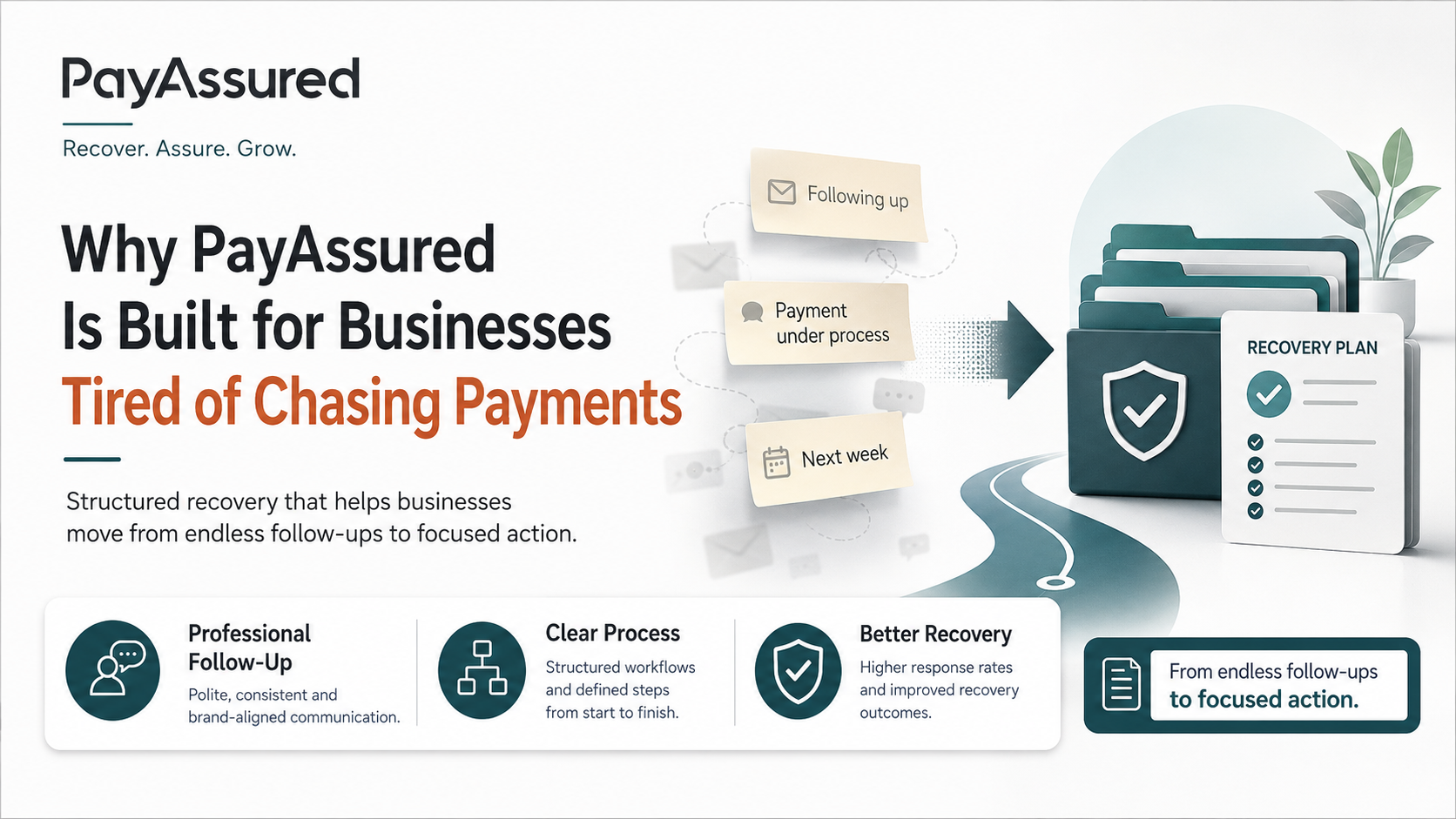
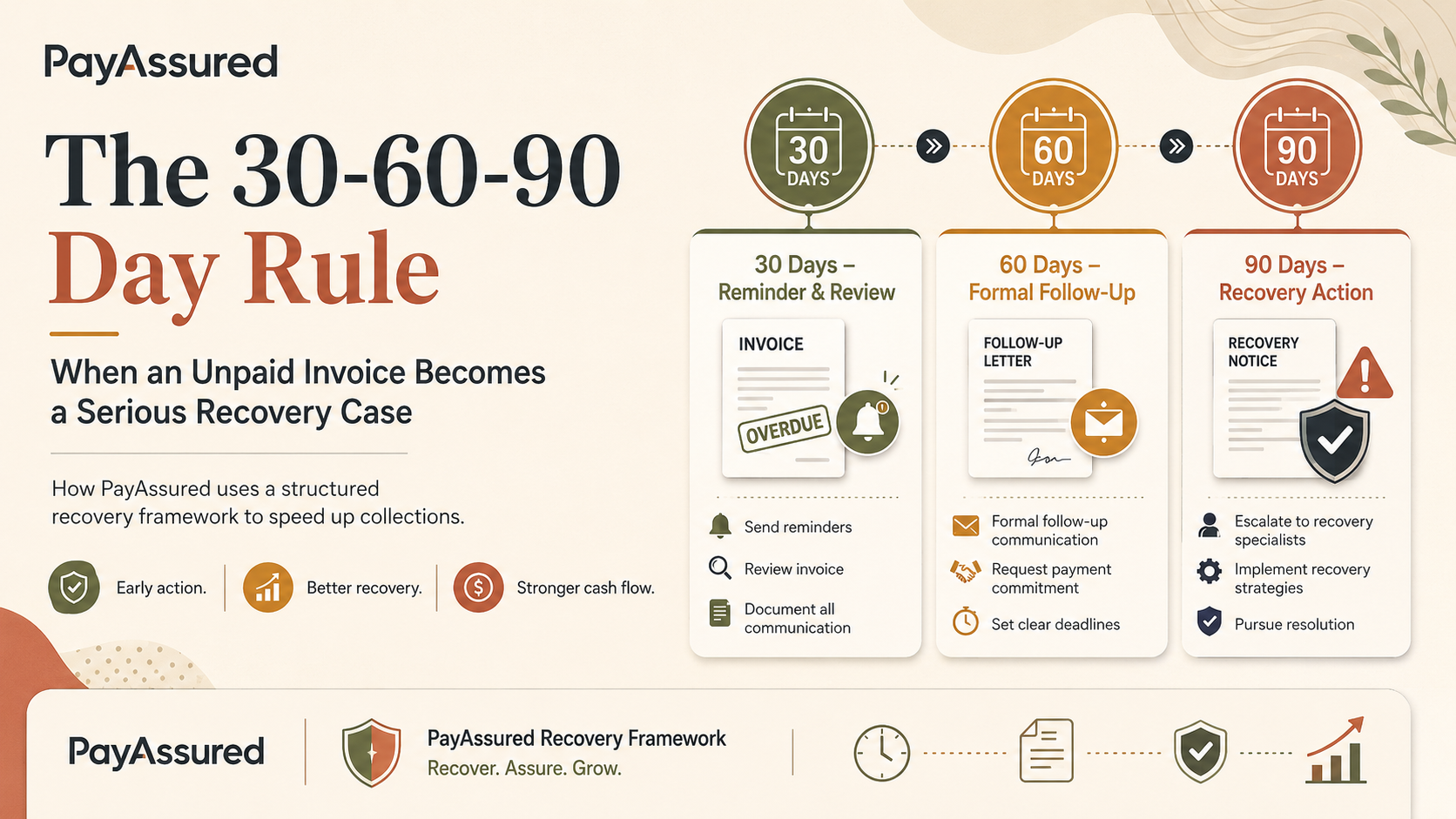
PayAssured helps businesses move from endless polite follow-ups to structured recovery action. Instead of allowing overdue invoices to remain stuck in vague conversations, PayAssured reviews the matter, checks the documents, understands the debtor’s behaviour and creates a clear recovery strategy. The goal is to help businesses recover their dues without depending only on repeated reminders.
Many businesses struggle because their internal teams are not designed for recovery. Sales teams want to preserve the client relationship. Finance teams may keep following up but may not know when to escalate. Founders and business owners may personally chase payments, but this takes time away from growth and operations. PayAssured fills this gap by bringing a professional, recovery-focused approach.
The process begins with clarity. PayAssured helps organize invoices, ledgers, purchase orders, delivery proofs, email trails, payment promises and other supporting documents. Once the claim is clear, the communication becomes stronger. The debtor is no longer dealing with casual reminders. The matter is being handled through a structured process.
This change itself can create movement. When debtors realize that the creditor is serious, organized and supported by a professional recovery partner, the payment conversation often changes. Vague replies are replaced with clearer commitments. Delays are questioned. Payment plans are discussed. Settlement possibilities are explored. Where required, formal and legal-backed steps can also be initiated.
PayAssured’s role is not just to apply pressure. It is to apply the right pressure at the right time. Some cases may need negotiation. Some may need a structured payment plan. Some may need formal demand. Some may need escalation. The approach depends on the age of the debt, the documents available, the debtor’s conduct and the recovery possibility.
This is important because waiting too long can reduce recovery chances. Early action gives the creditor a stronger position. It keeps the matter fresh, preserves communication records and maintains urgency. Delayed action allows the debtor more time to avoid, delay or dispute the payment.
For businesses, the lesson is clear. Courtesy should not become weakness. Patience should not become inaction. A good client relationship must include respect for payment timelines. If a business has delivered its work, it has the right to ask firmly for its money.
PayAssured helps businesses do this professionally. It allows companies to stop chasing payments informally and start handling overdue invoices through a structured recovery process. This helps protect cash flow, reduce stress and improve the chances of faster recovery.
Being polite is good business. But being too polite with unpaid invoices can cost a business heavily.
At some point, every business must stop waiting for another promise and start taking action. PayAssured helps businesses take that action with structure, professionalism and seriousness, so that unpaid invoices do not quietly turn into lost money.