

When "Payment Under Process" Becomes a Business Risk
- 29th June, 2026
- Abhishek
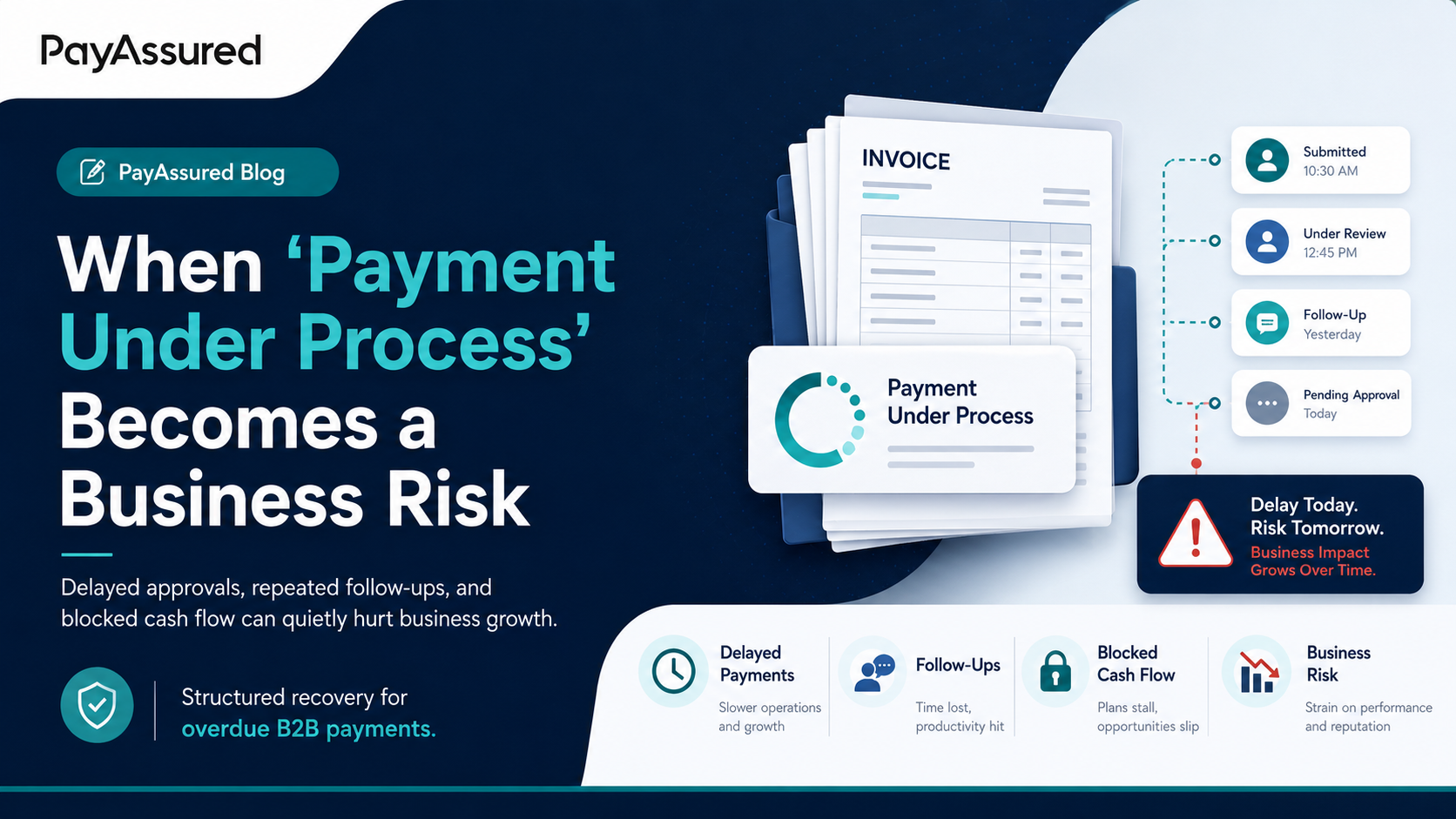
In the world of business, few phrases sound as harmless as "payment is under process." For a company waiting to receive money, it may initially feel like a reassurance. It suggests that the invoice has been accepted, the work has been acknowledged, and the payment is only a matter of time. But for many Indian businesses, this phrase has become one of the most common signs of a delayed payment cycle.
At first, it does not look like a serious problem. The client says the finance team is working on it. The accounts department asks for a few more days. Someone says the approval is pending. Another person says the payment will be released next week. The supplier waits because the relationship matters. The business owner avoids sounding too aggressive. The finance team continues to follow up politely.
But slowly, "payment under process" starts turning into a risk.
The real issue is not just the delay itself. The real issue is the uncertainty that comes with it. A business mounting goods, completed services, raised invoices, paid vendors, managed salaries, and already accounted for the revenue. Yet the money remains stuck. On paper, the company has revenue. In reality, its cash flow is blocked.
This gap between billed revenue and received payment can quietly damage a business. When money does not come in on time, the entire working cycle gets affected. Vendor payments may be delayed. Employee salaries may become stressful. New orders may require funding that the company does not have. Business owners may have to use personal funds, overdrafts or loans just to manage daily operations. What looked like a simple payment delay now begins to affect business stability.
This is especially true for MSMEs and growing businesses in India. Many such companies operate with limited working capital and depend heavily on timely payments from clients. One delayed invoice may be manageable. But when multiple clients begin delaying payments, the pressure increases quickly. A business that is profitable on paper can still feel cash-starved because its receivables are stuck.
The phrase "payment under process" becomes dangerous when it keeps repeating without any real movement. It becomes a warning sign when the client does not provide a clear payment date. It becomes a risk when calls are avoided, emails are ignored, or new excuses appear every week. It becomes even more serious when the debtor continues taking services, but does not clear past dues.
Many businesses continue waiting because they do not want to damage the client relationship. This is understandable. In B2B transactions, relationships are important. Companies often depend on repeat business, referrals and long-term commercial goodwill. However, protecting a relationship should not mean allowing the other party to misuse trust. A professional business relationship must include payment discipline.
Delayed payments are not only a financial issue. They also affect the confidence of the business. A founder who should be focusing on sales, operations and growth ends up chasing dues. A finance team that should be planning cash flow ends up sending reminders. A company that should be expanding begins operating defensively because its own money is not available when needed.
This is where businesses need to change their approach. Payment recovery should not begin only when the matter becomes impossible to handle. It should begin when the delay crosses a reasonable limit and the debtor stops giving clear commitments. The earlier a business acts, the better its chances of recovery. Waiting endlessly often weakens urgency and makes the debtor more comfortable delaying further.
A structured recovery process creates seriousness. It shows the debtor that the creditor is no longer treating the matter as a casual follow-up. It brings documentation, communication, legal awareness and commercial pressure into the process. This does not always mean immediate litigation. In many cases, a professional recovery approach can push the debtor towards settlement, payment planning or faster clearance without directly damaging the business relationship.
PayAssured helps businesses handle this exact stage of the problem.
When a company is stuck between repeated follow-ups and unclear payment promises, PayAssured helps convert that passive waiting into structured action. The process begins by understanding the outstanding amount, the age of the debt, the documents available, the communication history and the debtor's payment behaviour. Once the case is assessed, PayAssured works towards creating a recovery strategy that is professional, legally backed and practical.
For many businesses, this support is important because internal teams are not always equipped to manage recovery. Sales teams may hesitate to pressure clients. Finance teams may not have legal knowledge. Business owners may not have the time to chase every overdue invoice. Legal action may feel too extreme at the beginning. PayAssured fills this gap by bringing a focused recovery approach that balances pressure, professionalism and relationship sensitivity.
The objective is not simply to send reminders. The objective is to create movement. This may involve formal communication, documentation review, legal-backed follow-ups, settlement discussions, repayment planning and escalation where required. When the debtor sees that the matter is being handled by a professional recovery partner, the tone of the conversation often changes. The invoice is no longer just another pending item in the accounts department. It becomes a matter that requires attention.
Businesses must understand that every unpaid invoice has a timeline. In the first few days, it may be a delay. After several weeks, it becomes a concern. After months of excuses, it becomes a recovery case. The mistake many businesses make is treating all these stages theامله way. A polite reminder may work in the first stage, but it may not work when the debtor has already become comfortable delaying payment.
This is why payment discipline must become part of business discipline. Companies should not wait until year-end to review unpaid dues. They should not allow old receivables to remain pending without action. They should not accept vague promises without written commitments. Most importantly, they should not confuse "under process" with "payment confirmed."
A payment is not real until it is received. An assurance is not recovery. A promise is not cash flow. For a business, money becomes useful only when it reaches the account and can be used to run operations, pay obligations and support growth.
In today's Indian business environment, delayed payments can no longer be treated casually. Competition is increasing, costs are rising, credit cycles are becoming tighter, and cash flow has become one of the most important measures of business strength. Companies that act early on unpaid invoices are better protected. They reduce bad debts, maintain working capital and send a clear message that payment obligations must be respected.
PayAssured exists to help businesses take that step with confidence. It gives companies a structured way to recover outstanding dues without depending only on repeated calls and informal reminders. For businesses tired of hearing "payment is under process," PayAssured provides a path to move from uncertainty to action.
Because in business, the risk does not begin when a client refuses to pay. Many times, it begins much earlier, when the same promise is repeated again and again with no real payment in sight.
That is the moment when "payment under process" stops being a reassurance and starts becoming a business risk.


