
A Step-by-Step Guide to Recovering Outstanding B2B Payments without Legal Hassle
- 15th April, 2026
- Abhishek Premkumar
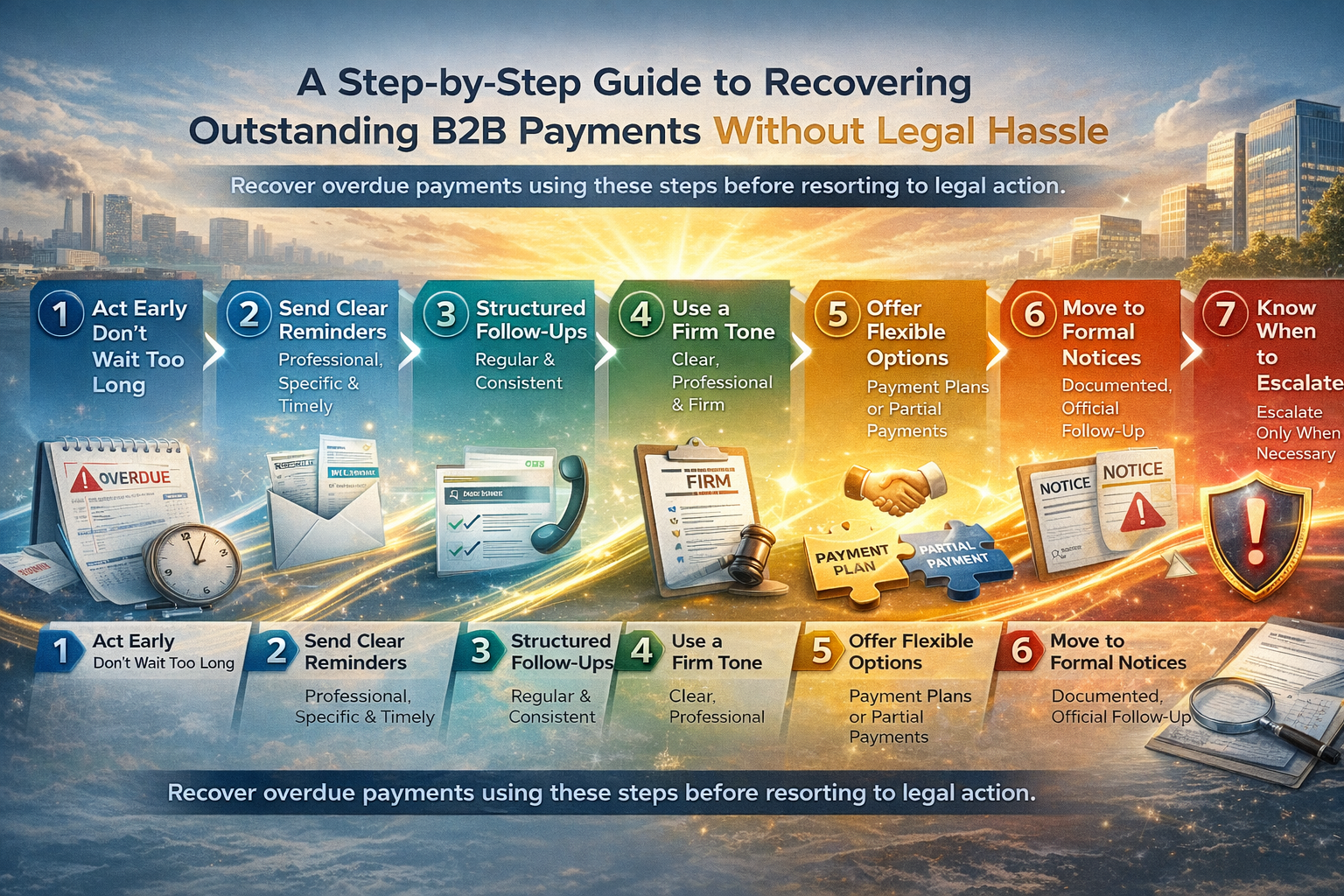
Recovering overdue payments is a universal challenge, but few follow a structured approach. Most businesses either delay action or react emotionally, leading to poor results. A better way is to follow a clear process that increases recovery chances without immediate legal complications.
Step 1: Act Early - Don’t Wait
The moment an invoice crosses its due date, address it. Even a simple reminder keeps the payment on the client’s radar. The longer you wait, the lower the urgency for the client.
Step 2: Professional Reminders
Communicate clearly. Mention the invoice number, due date, and amount. Ask for a specific payment timeline. Clarity creates accountability.
Step 3: Structured Follow-Ups
Random follow-ups don’t work; consistency does. A planned pattern of emails and calls shows seriousness and increases pressure without aggression.
Step 4: Firm Tone
If delays continue, shift to a firm but professional tone. This signals seriousness and often triggers a response once the client realizes the matter is being prioritized.
Step 5: Understanding Perspective
Check if the delay is due to genuine cash flow issues. In these cases, offering solutions like partial payments or structured plans can recover funds faster.
Step 6: Formal Communication
If the client remains unresponsive, use professionally drafted notices. This documented communication creates enough urgency for most to trigger payment.
Step 7: Strategic Escalation
If all else fails, know when to escalate. By this stage, your structured path significantly strengthens your position and increases recovery chances.
"B2B repayment is not about chasing harder—it's about following the right process."
Final Thought
Recovering payments is about being efficient and strategic without damaging business relationships. Acting early and staying consistent are the keys to avoiding legal hassle.